French that
opens doors.
You need French for a reason. I build the shortest honest path to it — and tell you exactly where you stand.
Three tracks. Pick your pace.
All one-on-one, all online, all shaped by your diagnostic. What changes is the split: building French vs. sharpening it.
Sprint
Exam's close. Your French is nearly there.
Bridge
Real work on your French, before exam polish pays off.
Foundation
Building durable French. The exam's a checkpoint, not the point.
Not sure which fits? That's the diagnostic's job. Book the free consult — we'll map you to your track.
More than the hour we spend together.
A tutoring session can explain what to do. Your French improves through what happens between sessions: focused practice, fast correction, and a clear sequence of skills. That is why every French with Ash program combines three parts.
The program continues between sessions — because that is where progress is built.
FOCUSED PRACTICE · FAST CORRECTION · CLEAR SEQUENCE
Private 1-on-1 coaching
Every session is built around your level, your weakest skills and your goal. We practise, measure and adjust — not simply follow a generic lesson plan.
A curriculum built for your path
You receive access to the lessons, exercises, speaking drills, writing models and exam-style practice assigned to your program. You always know what to study next and why it matters.
Feedback within 24 hours
Submit your assigned work and receive clear, actionable feedback within 24 hours. You correct mistakes while the lesson is still fresh instead of carrying them into the following week.
Your sessions are only one part of the program. The curriculum gives your work direction. The feedback keeps mistakes from becoming habits. The private coaching brings everything together and moves the plan forward.
You are not paying for an hour of conversation. You are enrolling in a structured path from where your French stands today to where it needs to be.
Diagnose first. Then commit.
No program starts until we both know where you stand. That order is why my plans work.
Consult call
Your goal, your timeline, whether I'm the right fit. Not a lesson — a fit check, both ways.
Diagnostic
You write, you speak, scored on the real rubrics. You leave with a one-page report: NCLC level per skill, your biggest bottleneck, the path forward. Required first.
Pick your program
Sprint, Bridge, or Foundation. The diagnostic tells us which — no guessing.
Montréal French. The kind people actually speak.
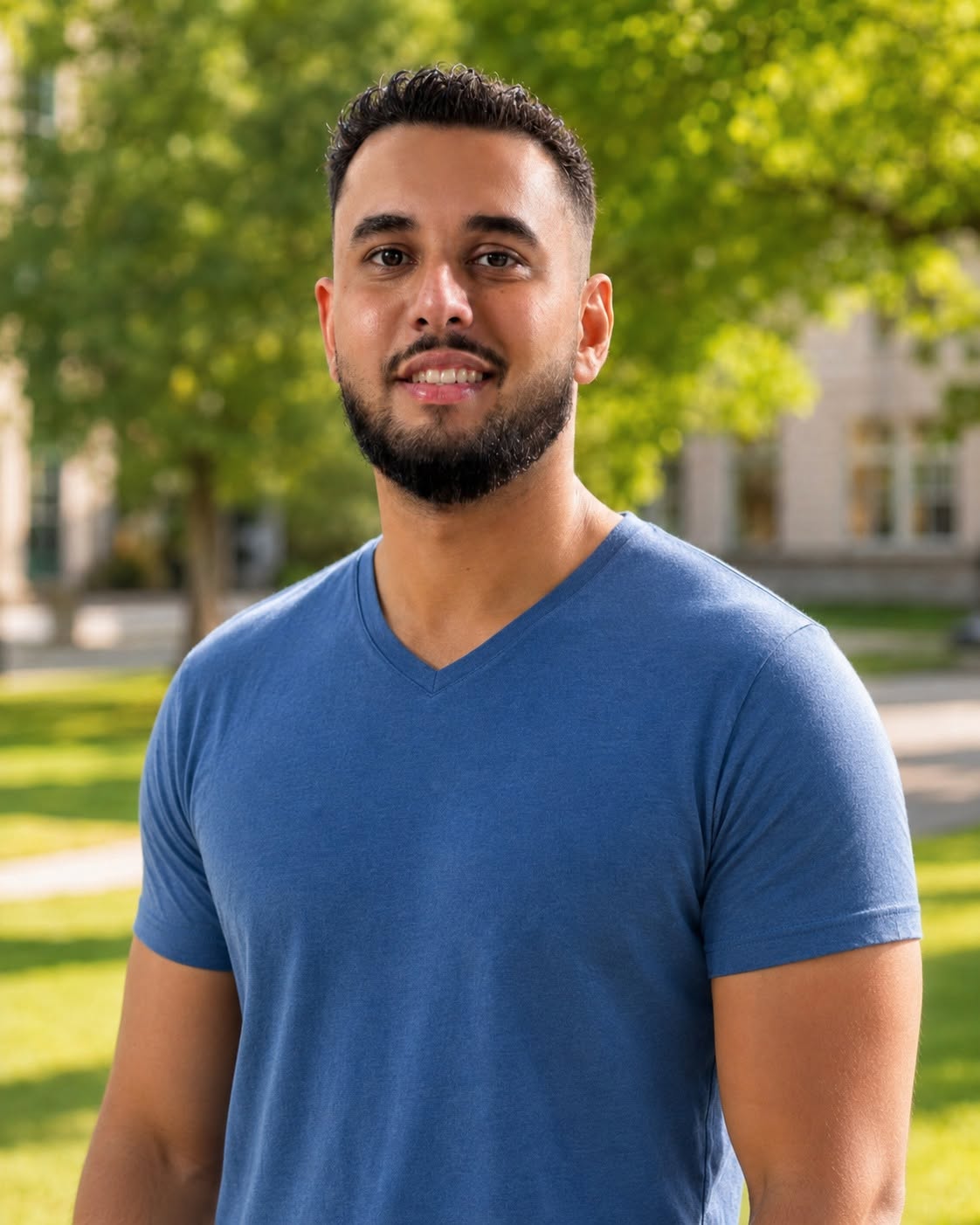
I'm Ashfaaq Kazi — a Mauritian-Canadian tutor in Montréal. Trilingual in English, French, and Arabic, with years spent working in both of Canada's official languages.
Two convictions. One: the fastest way to learn a language is to speak it — badly, from day one. Two: exam scores come from teachable moves, so honest feedback beats comfortable feedback.
« Une réponse tentée vaut mieux qu'un silence parfait. »
An attempted answer beats a perfect silence — the first rule in every beginner lesson.
What progress looks like.
Every student begins somewhere different. The program starts by identifying the distance between where your French stands and where it needs to be — then building the work around that gap.
“I stopped guessing what NCLC 7 required.”
I had studied French for almost two years, but my writing remained stuck at NCLC 6. I knew plenty of vocabulary and grammar, yet my answers still weren't earning the score I needed. Ash showed me that the problem wasn't simply my French — my arguments lacked structure, and I wasn't developing my ideas according to the evaluation criteria. Every assignment came back within 24 hours with clear corrections and one or two priorities for the next attempt. Instead of repeating the same mistakes across several essays, I could correct them while the lesson was still fresh. Ten weeks later, my written expression reached NCLC 7.
“The program fit around my job.”
I work full time and could only study early in the morning or after work. Before joining, I spent too much of that limited time searching for exercises and trying to decide what to practise. With French with Ash, every week had a clear sequence: one lesson, a targeted exercise, a timed task and feedback before I moved forward. I didn't have to design my own preparation plan. The workload was demanding, but it was manageable because every assignment had a purpose. After six weeks, I entered the TCF knowing exactly how to approach each speaking task.
“My second attempt felt like a different exam.”
After my first TEF attempt, I thought I needed to improve everything. I had missed NCLC 7 in two skills, and my preparation had become a collection of random videos, vocabulary lists and practice tests. The diagnostic showed that writing organization was my biggest scoring problem — my French was stronger than the result suggested, but I wasn't presenting my ideas in the way the exam rewarded. Ash built the next six weeks around that bottleneck. I practised fewer things, but I practised the right things repeatedly. On my second attempt, my writing moved from NCLC 6 to NCLC 8.
“I finally knew what to say when the timer started.”
I could understand French in daily conversations, but the moment I had to speak under exam conditions, my mind went blank. I would start answering without a structure and lose confidence halfway through. We broke the oral tasks into moves I could practise: introduce the situation, ask purposeful questions, develop an argument and respond when the examiner pushed back. The speaking drills between sessions meant that I wasn't starting from zero every week. By the end of the program, I was no longer searching for a perfect answer — I knew how to build a strong one.
“I was speaking French in my first session.”
I joined knowing little more than bonjour and merci. I expected to spend the first few weeks memorizing the alphabet, verb tables and long vocabulary lists. Instead, Ash helped me build useful sentences during our first session. The curriculum introduced one pattern at a time, and the exercises helped me use that pattern in different situations until it felt natural. Four months later, I could introduce myself, describe my work, make plans and handle simple conversations without translating every word in my head.
“Fast feedback changed the way I practised.”
Before this program, I would write three or four practice texts before anyone corrected them. By the time I received feedback, I had already repeated the same errors several times. Here, my assigned writing came back within 24 hours. Ash didn't only correct the sentences; he explained which mistakes were affecting clarity, organization and the evaluation criteria. My next assignment was designed to make me apply those corrections immediately. I started recognizing my own patterns before submitting — that was when writing stopped feeling unpredictable.
“The diagnostic changed my entire study plan.”
I booked the diagnostic believing that speaking was my weakest skill. The assessment showed something unexpected: my speaking was already close to my target, while listening was pulling down my overall result. That changed how I used the eight weeks before my exam — instead of dividing my time equally across all four skills, Ash built the plan around listening accuracy, note-taking and the question types I was consistently missing. The diagnostic saved me from spending two months fixing the wrong problem.
“I learned the French I was actually hearing in Quebec.”
I had studied formal French before arriving in Quebec, but everyday conversations still felt much faster and less familiar than what I had learned. Ash helped me understand the expressions, pronunciation and rhythm I was hearing around me while continuing to strengthen my grammar. The lessons connected directly to situations from my work and daily life. After five months, I could participate in workplace conversations, ask follow-up questions and express my opinion without rehearsing every sentence first.
“The honest answer was exactly what I needed.”
I initially wanted an intensive six-week exam course. After the diagnostic, Ash explained that my current level made that timeline unrealistic. He showed me where I stood in each skill and what reaching NCLC 7 would actually require. It wasn't the answer I expected, but it prevented me from paying for exam tricks before I had the French foundation to use them. I started with the Foundation program, reached a solid intermediate level and moved into exam preparation when the progress checks showed I was ready.
“It never felt like one isolated lesson per week.”
I had taken weekly tutoring before, but most of the progress depended on what I managed to organize for myself between lessons. If I became busy, the entire week disappeared. French with Ash felt like one connected program — the live session introduced the priority, the curriculum showed me what to study, and the assigned practice made me use it. When I submitted work, the 24-hour feedback shaped what I did next. I wasn't paying for a weekly conversation. I had a plan that continued working between sessions.
Your starting point will be different.
That is why every French with Ash program begins with a diagnostic — not a predetermined package. You will know where your French stands, which skill is holding you back, and what a realistic path forward looks like.
The things people ask before booking.
If yours isn't here, the consult call is the place for it. Thirty minutes, no cost.
Is this online, or in person in Montréal?
Which exams do you prepare students for?
I'm a complete beginner. Is this for me?
Do I really need the diagnostic first?
How much does it cost?
Will I learn France French or Quebec French?
How long until I reach NCLC 7?
What do I need for a session?
Thirty minutes. No cost. No pressure.
Pick a time. We'll talk goals and timeline, and you'll leave knowing if it's a fit.
Calendar not loading? Open the booking page directly or email ashfaaq.kazi@outlook.com.